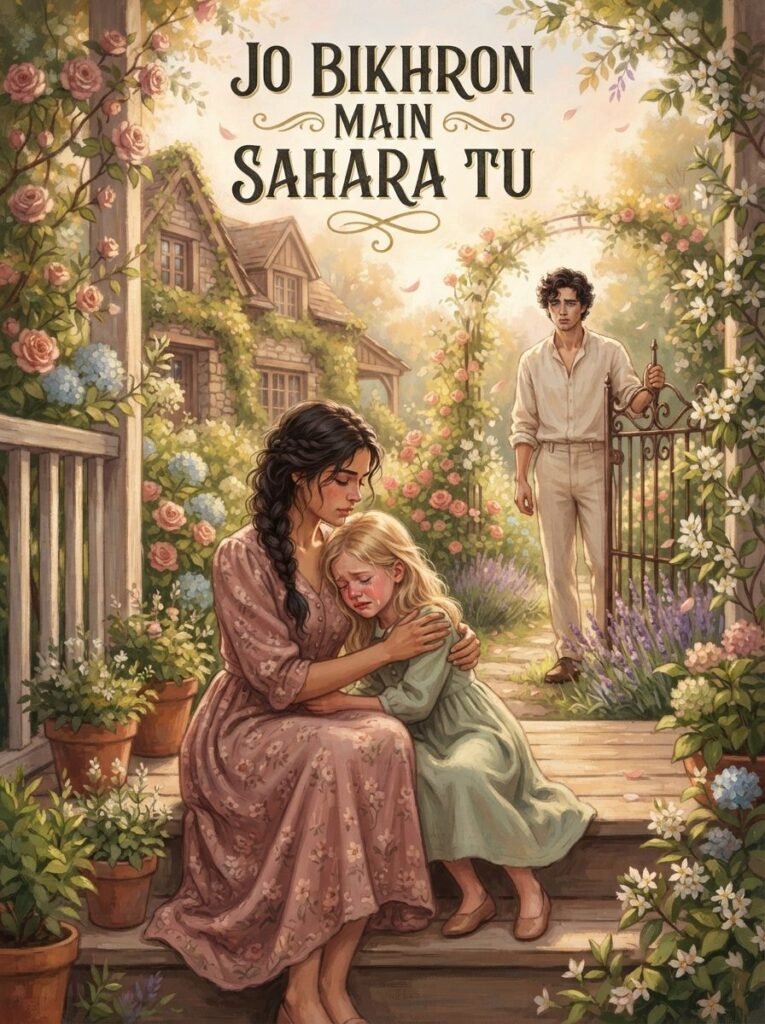
You were the support in my brokenness is the kind of title that tells you exactly what the book is going to ask of its characters. Meerab Hayat builds a family drama around two sisters whose mother’s old mistakes keep shaping their present, then lets one unexpected arrival start pulling the pieces back together. Running well over a thousand pages, it has become one of her most widely read socio-romantic novels.
Main Characters
- Mishal Alvi: the main lead of the story, carrying the weight of a family history that was never really hers to carry, but that shapes her life regardless.
- Zargham: enters the story at a real turning point, and his presence changes the direction Mishal’s life has been heading in.
- Zaigham Ajlal: Zargham’s brother, who plays a supporting role in the story’s romantic side, adding his own layer to the family’s tangled relationships.
- Fariha Begum: Mishal’s mother, who carries a past shaped by difficult decisions, decisions that continue to affect her daughters’ lives and drive much of the novel’s conflict.
- Agha Sahab and other family members: they represent the wider household, bringing societal pressure and complicated family dynamics into nearly every chapter.
Story Summary
Jo Bikhron Main Sahara Tu opens in a household still living in the shadow of choices made long before its younger generation had any say in them. Fariha Begum’s past, marked by decisions that were far from simple, has left a mark on her daughters that neither of them chose but both have to carry. Mishal Alvi grows up inside that inheritance, her own sense of self shaped by family history and the weight of old mistakes she did not make.
Everything shifts with Zargham’s arrival. Meerab Hayat treats his entrance as a genuine turning point rather than a simple romantic beat, letting his presence unsettle the family’s usual patterns and give Mishal something outside her inherited history to hold onto. Zargham’s brother, Zaigham Ajlal, adds his own thread to the story’s romantic side, while Agha Sahab and the wider family circle keep the pressure of tradition and reputation close at hand, making sure nothing in Mishal’s life happens without an audience.
As the story moves forward, both Mishal and Zargham are pushed to confront fears and past traumas they would rather have left alone. Meerab Hayat takes the reader through real emotional highs and lows rather than rushing toward comfort, letting misunderstanding and old wounds do genuine damage before any repair can begin. The novel closes on a note that feels both fulfilling and hard won, with misunderstandings resolved and characters learning to forgive both themselves and each other, arriving at the idea that the support which remains when everything else falls apart is the only kind worth trusting.
Central Themes
- Inherited consequences: Fariha Begum’s past decisions ripple directly into her daughters’ present, showing how one generation’s mistakes rarely stay contained to that generation alone.
- Support as the true measure of love: True to its title, the novel treats steady presence through hardship as more meaningful than any grand romantic gesture.
- Family pressure and reputation: Agha Sahab and the wider household keep societal expectation close to every decision Mishal makes, grounding her personal story in real social weight.
- Confronting old trauma to move forward: Both Mishal and Zargham have to face fears rooted in the past before they can build anything steady together.
- Forgiveness as resolution: The novel’s ending leans on forgiveness, both of others and of oneself, as the real path out of the pain that defined its opening chapters.
Final Thoughts
Jo Bikhron Main Sahara Tu has stayed a reader favorite by giving its family drama real weight, letting Fariha Begum’s past genuinely shape Mishal’s present rather than treating it as background detail. Meerab Hayat gives Zargham’s arrival real narrative purpose, and the slow, sometimes painful process of confronting old wounds makes the eventual resolution feel earned. If you enjoy long, emotionally rich Urdu novels about family, inherited pain, and the kind of support that holds steady through it all, this one rewards the time it asks for.
More Urdu Novels to Read
The rest of Meerab Hayat’s catalog sits alongside the wider Emotional Based Novels collection here. Where to go next: