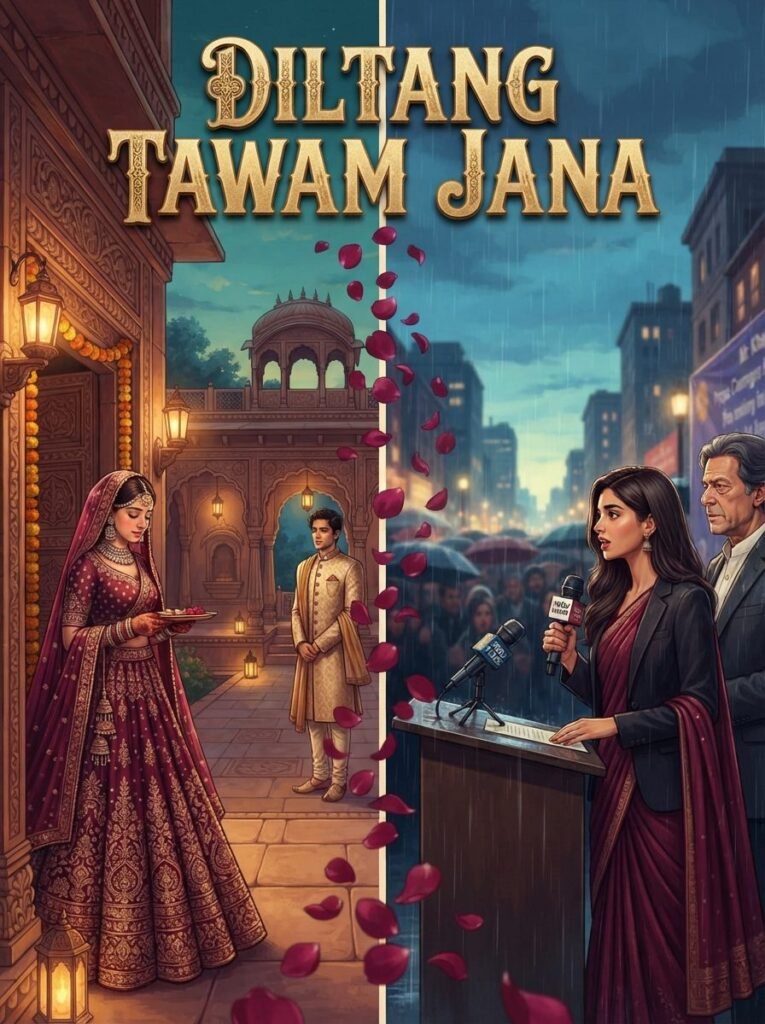
Some novels give you one love story and call it a day. Diltang Tawam Jana, also written as Dil Tang Tawam Jana, gives you two, and lets each one press on a different nerve. Farwa Khalid pairs a feud settled through a Wani marriage with a political romance that fell apart years earlier, and the result is a novel about how much damage old traditions and old pride can still do.
Main Characters
- Zakwan Rabbani: the grandson of Hashim Rabbani, a powerful and respected feudal lord, and the one meant to inherit that position. He is not the typical feudal heir, and that difference shapes how he handles the marriage that is forced into his life.
- Masoora Gillani: belongs to the Gillani family, rivals of the Rabbanis in power and standing. Circumstances beyond her control place her in Zakwan’s home through a Wani marriage.
- Maheroo: a news anchor and reporter, sharp and independent, with a history she has never fully left behind.
- Altamash: a famous politician who once loved Maheroo. They knew each other from university, and their separation is the wound the second story is built around.
- Hashim Rabbani: stands over the Rabbani side of the story as the elder whose authority frames the family’s feud with the Gillanis.
Story Summary
The first storyline opens with two powerful families locked in conflict. When a member of the Gillani family kills one of Zakwan’s cousins, the feud is settled the old way, through a Wani marriage, and Masoora is given to the Rabbanis as compensation. She enters a household that has every reason to resent her, for something she did not do.
Zakwan does not fit the mold of the feudal heir people expect. That makes his choices harder to predict, and it makes the story more interesting than a simple tale of a cruel husband. The marriage begins in grief and distrust, and Farwa Khalid does not skip past that. What happens between Zakwan and Masoora unfolds slowly, and the novel leaves the full outcome for readers to discover.
The second storyline follows Maheroo and Altamash. They were in love back in university, but circumstances pulled them apart, and years later they meet again in a very different setting. She reports the news. He makes it. Their shared past sits between them in every scene, and the novel asks whether two people who once loved each other can reach across that much time, ambition, and hurt.
Farwa Khalid moves between the two couples, letting the family feud and the political world reflect each other. Both stories deal with people pushed into roles they did not choose, and both ask what honesty and forgiveness cost when tradition and pride are pulling the other way.
Central Themes
- Tradition versus the individual: The Wani marriage sets a woman’s fate by a family settlement, and the novel keeps asking who pays when old customs are followed without question.
- Feud and forgiveness: The Rabbani and Gillani conflict shapes every relationship in the first storyline, and healing it means facing the loss on both sides.
- Love that outlives separation: Maheroo and Altamash show what happens when a university romance meets ambition, careers, and years of silence.
- Power that does not guarantee peace: Both a feudal heir and a well known politician hold real influence, yet neither can use it to fix what hurts most.
- Two stories, one question: Set side by side, the couples ask whether love can survive when the world has already decided how the story should go.
Final Thoughts
Diltang Tawam Jana works because its two storylines complicate each other instead of competing. Farwa Khalid gives Zakwan and Masoora the weight of a real feud, and Maheroo and Altamash the sting of a second chance that may come too late. If you like Urdu novels with feudal settings, a political backdrop, and more than one romance to follow, this one is a solid pick. It is worth going in knowing that the Wani premise deals with a real and painful custom, and the novel treats it as a hardship, not a romantic shortcut.
More Urdu Novels to Read
Stories built around Vani and the women it binds fill the Wani Based Novels collection on this site. Where to go next: