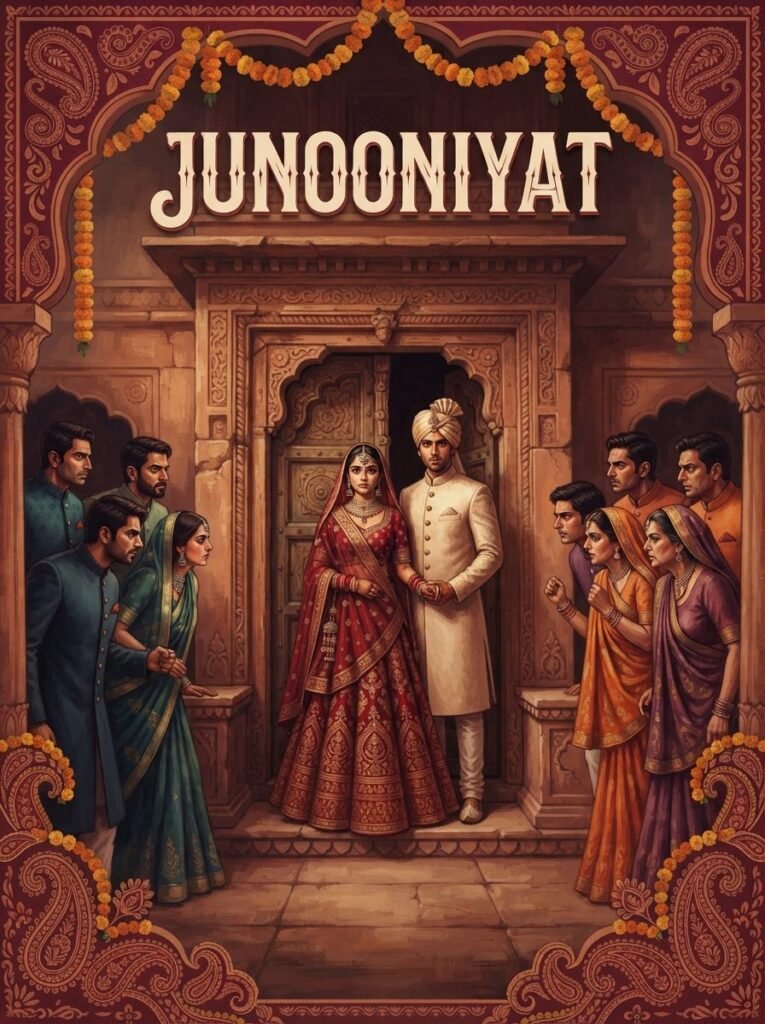
Junooniyat means obsession, and Areej Shah sets that obsession against a fifty year old feud between two families who have never once considered laying it down. Built around the practice of Vani, where a woman is married off to settle a family debt of honor, the novel follows a bride caught between two warring households and the husband who refuses to accept the hatred he inherited. It has become known for tackling real social issues alongside its central romance.
Main Characters
- Amaya: enters the story already burdened by the practice of Vani, married off as a way of settling old scores between two feuding families. Falsely accused of things she never did, she endures real hardship at the hands of her in-laws, and her resilience through that injustice gives the novel its emotional core.
- Zaryam: Amaya’s husband, pushed into the marriage by family pressure despite having no personal stake in the fifty year old hatred between the Shah and Kazmi families. His refusal to see either side as superior to the other sets him apart from nearly everyone around him.
- Khadash Kazmi: stands as the sole heir of the Kazmi family, a mature, responsible figure whose decisions carry weight with the entire household, even his own grandfather.
- Desham Kazmi: bold, confident, and openly rude when it suits her, with a singular passion for her studies that sets her apart from the family drama surrounding her.
Story Summary
Junooniyat opens on a feud that has already outlived multiple generations, the Shah and Kazmi families locked in hostility for fifty years with no clear end in sight. Into that hostility comes Amaya, married off through the practice of Vani, a tradition that uses a woman’s marriage as a way of settling a family’s debt of honor rather than considering what she might actually want. Her new husband, Zaryam, has no real interest in continuing his family’s hatred, treating both sides of the feud as equals despite the pressure surrounding him, but that fairness does little to protect Amaya from suspicion and false accusation once she enters his household.
As Amaya endures mistreatment from her in-laws, accused of wrongdoing she had no part in, the wider Kazmi family continues operating under the shadow of their feud with the Shahs. Khadash Kazmi, the family’s sole heir, carries real authority within that world, his decisions respected even by his own grandfather, while his relative Desham Kazmi brings her own sharp, unapologetic energy into the story, more focused on her studies than on the old grudges consuming everyone around her. Areej Shah weaves these characters together against the region’s harsher traditions, using Vani specifically to examine how deeply old customs can damage the people trapped inside them, regardless of personal innocence.
As the story unfolds, Zaryam’s quiet refusal to hate on command becomes increasingly important, offering Amaya a rare source of fairness inside a household otherwise shaped by suspicion and inherited resentment. Areej Shah lets revenge, injustice, and slow reconciliation play out across the novel, following Amaya’s fight to clear her name and build something real with Zaryam despite everything working against them. The feud itself remains a constant undercurrent, testing whether personal integrity can actually outlast fifty years of accumulated hatred.
Central Themes
- The real cost of forced tradition: The practice of Vani sits at the center of the novel, showing how customs meant to settle family honor often destroy the innocent people caught inside them.
- Fairness against inherited hatred: Zaryam’s refusal to treat either family as superior stands as a quiet act of resistance against a feud he never chose to be part of.
- False accusation and the fight to be believed: Amaya’s struggle against unjust blame from her in-laws gives the novel real emotional stakes beyond the central family conflict.
- Old rivalries passed down through generations: The fifty year feud between the Shah and Kazmi families shows how inherited resentment can outlive whatever original grievance started it.
- Individual character against family expectation: Figures like Khadash and Desham Kazmi show different ways people navigate family authority and old grudges, whether through responsibility or open defiance.
Final Thoughts
Junooniyat distinguishes itself by grounding its central romance in a genuine examination of harmful tradition, using Amaya and Zaryam’s story to push back against practices like Vani that too often go unquestioned. Areej Shah gives Amaya real resilience in the face of injustice, while Zaryam’s fairness offers a clear moral counterpoint to the feud consuming everyone around them. If you enjoy Urdu fiction that pairs passionate romance with genuine social commentary on forced marriage and family honor, Junooniyat delivers a genuinely compelling read.
More Urdu Novels to Read
Stories built around Vani and the women it binds fill the Wani Based Novels collection on this site. Where to go next: