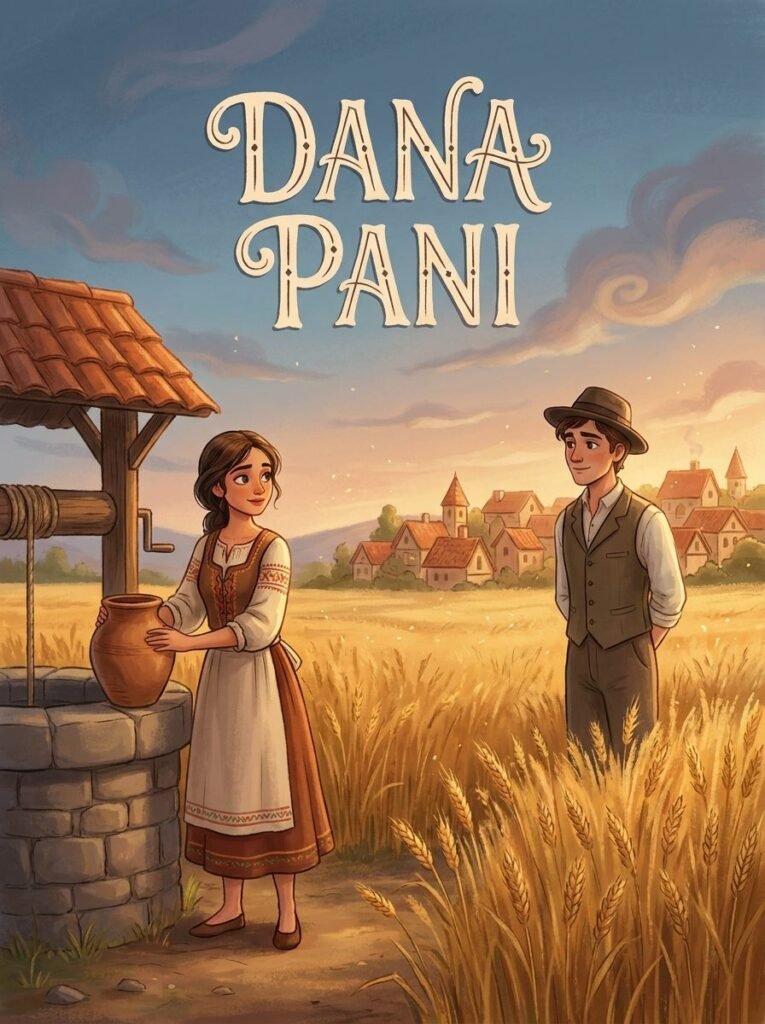
Dana Pani, meaning grain and water, is an old Urdu phrase for the share of sustenance each person is destined to receive in life. Umera Ahmed builds an entire village around that idea, setting a quiet, almost fable like love story against the sharp divide between those who own the land and those who work it. Told with a spiritual undertone rare even for her, it has become one of her more distinctive shorter novels.
Main Characters
- Gaamu: the village mashki, who spends his days supplying water to every household, the mosque, and the animals of Jhok Jeevan, reciting verses of devotion as he works. Despite ten childless years of marriage, his love for his wife never wavers.
- Allah Wasai: Gaamu’s wife, who adores her husband deeply and holds onto quiet faith even through years of longing for a child of their own.
- Motiya: their only daughter, born after the couple seeks a blessing from Peer Ibrahim, and her arrival marks the beginning of the novel’s central journey. She grows into a beautiful, intelligent young woman who earns a medical degree despite her humble background, carrying real dignity and resilience.
- Chaudhary Karamat: the village’s wealthiest landowner, the man who provides grain to nearly every family that works his haveli, including Gaamu’s own household, making him one of the daane wale, the grain givers, in contrast to the paani wale, the water carriers, like Gaamu.
- Murad: Chaudhary Karamat’s son, who grows up on the opposite end of the village’s social divide from Motiya, and his story becomes tightly bound to hers as the novel unfolds.
Story Summary
Dana Pani opens in the village of Jhok Jeevan, where Gaamu the mashki has spent a decade of marriage to Allah Wasai without the child they have quietly longed for. Their prayers, offered through Peer Ibrahim, are eventually answered with a daughter, Motiya, whose birth carries an early sense of spiritual significance that follows her throughout the story. Despite her family’s modest standing as water carriers, Motiya grows into someone of real intelligence and grace, eventually earning a medical degree that sets her apart from the limited expectations placed on someone from her background.
Her path repeatedly crosses with Murad, the son of Chaudhary Karamat, the village’s wealthiest landowner and the very man whose grain many families, including Motiya’s own, depend on to survive. The divide between the daane wale and the paani wale, the grain givers and the water carriers, sits at the heart of everything standing between Motiya and Murad, giving their connection real social weight beyond simple romantic obstacles. Umera Ahmed lets their bond develop against this backdrop of destiny, faith, and rigid social expectation, tracing how love tries to survive when it exists on the wrong side of an old, deeply entrenched class divide.
As the story moves forward, family pride, jealousy, and the pressures of village hierarchy all test what Motiya and Murad are building together. True to Umera Ahmed’s reputation for stories that rarely offer easy comfort, Dana Pani does not shy away from real consequence, letting its characters suffer through genuine hardship before the novel reaches its resolution. What emerges is less a simple love story and more a meditation on how much of life is shaped by fate, faith, and the social structures people are born into.
Central Themes
- Destiny and one’s allotted share in life: The title itself reflects the novel’s central idea, that each person receives a fixed portion of sustenance and experience, shaping how far ambition and love can actually take them.
- Class divide between grain and water: The distinction between the daane wale and the paani wale gives the novel’s central romance genuine social stakes beyond personal feeling.
- Faith rewarded through patience: Gaamu and Allah Wasai’s years of quiet devotion before Motiya’s birth reflect a recurring theme of trust in divine timing.
- Dignity across social lines: Motiya’s resilience and achievement despite her humble origins challenge the village’s rigid assumptions about who deserves respect and opportunity.
- Love tested by pride and jealousy: Motiya and Murad’s bond is repeatedly strained by family pride and social hierarchy, reflecting how personal feeling often has to fight against inherited expectation.
Final Thoughts
Dana Pani distinguishes itself among Umera Ahmed’s novels by trading her more common urban, spiritual settings for a village fable built on faith, sustenance, and class division. Gaamu and Allah Wasai’s simple, golden hearted devotion gives the novel its emotional foundation, while Motiya and Murad’s struggle against the divide between their families adds real social weight to what could have been a simple romance. If you enjoy Umera Ahmed’s shorter, more allegorical work, Dana Pani offers a quieter but no less affecting read than her longer, better known novels.
More Urdu Novels to Read
Umera Ahmed’s other work sits alongside the rest of the Emotional Urdu novels collection here. Where to go next: