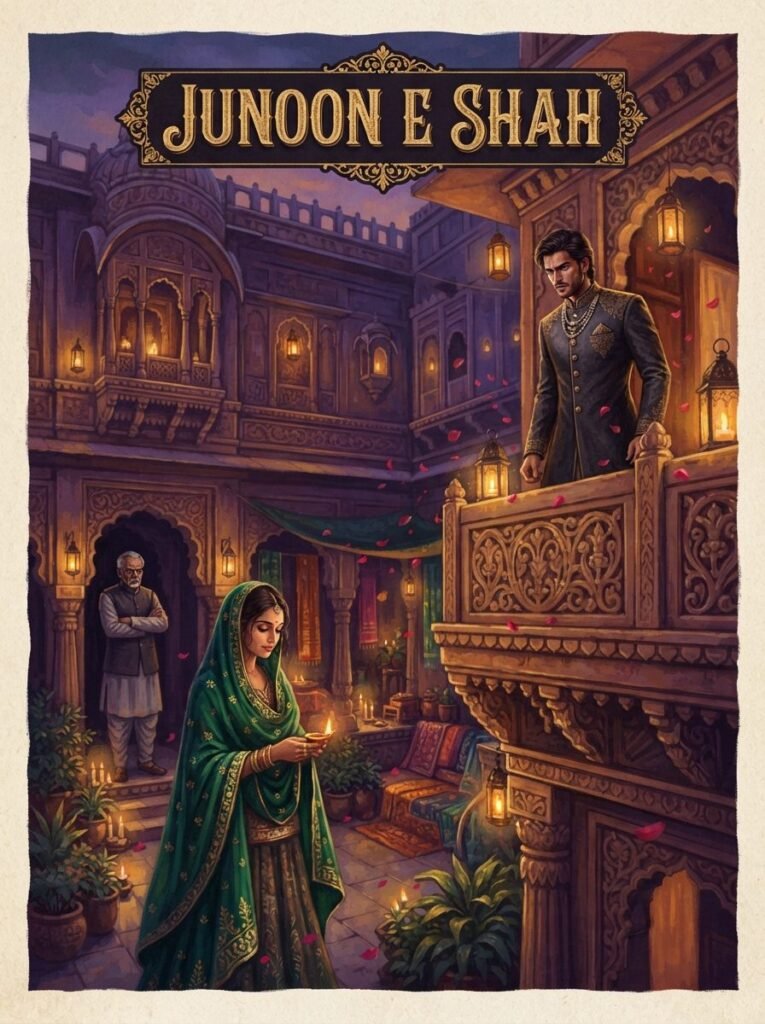
Junoon means obsession, and Hayat Sikandar puts that word at the center of a romance where love arrives with more force than either lead knows how to handle. Two people from very different emotional worlds collide under circumstances neither planned, and what follows is less a smooth courtship than a long argument between pride and feeling. The novel is complete, which makes it an easy pick for readers who prefer to read a story straight through.
Main Characters
- Shahzain: the hero at the heart of the novel, intense, protective, and driven by a devotion that does not know how to stay quiet. His arc, from guarded pride toward something more honest, is the part of the story readers mention most often.
- The heroine: comes from an emotional background very different from his, and her steady presence tests every assumption Shahzain has about control and closeness.
- Sikandar Shah: represents the family elders whose expectations shape the household around the couple, adding real pressure to a relationship that would already be difficult without it.
- Meerab: a close companion in the story, whose presence gives the novel warmth and a second view on what the central couple is going through.
Story Summary
Junoon e Shah begins with two people whose paths cross at exactly the wrong moment. Their emotional backgrounds could hardly be further apart, and Hayat Sikandar makes sure the first stretch of the story leans on that contrast, letting misunderstanding and pride do most of the work of keeping them apart.
As their connection grows, family expectations start pressing in from every direction. Elders like Sikandar Shah hold firm ideas about how things should be done, and the household setting turns every disagreement between the leads into something larger than a private quarrel. Decisions made in anger add more damage, and the novel does not hurry to repair it. Instead, it makes both characters face their flaws, their secrets, and the traditions they have inherited before they can find any shared ground.
Shahzain’s protective intensity sits at the center of that struggle. His devotion is real, but it comes with a temper and a pride that keep costing him the trust he wants most. Meerab and the wider circle around the couple offer perspective, and the story slowly moves from conflict toward something steadier. By the final chapters, passion has been tested against miscommunication and social boundaries, and what survives is a love that has had to earn its place.
Central Themes
- Passion tested by pride: The title’s junoon is never treated as simple romance; the novel keeps asking what happens when intensity meets a stubborn ego.
- Miscommunication as a real obstacle: Much of the conflict comes from things left unsaid, showing how silence can hurt as much as anger.
- Family expectation and social boundaries: Elders and household traditions keep pressing on the couple, tying their private struggle to the world around them.
- Facing flaws before finding common ground: Both leads have to confront their own faults and secrets before any real closeness is possible.
- A protective hero learning restraint: Shahzain’s arc shows how devotion has to learn patience before it becomes something the other person can trust.
Final Thoughts
Junoon e Shah works because it refuses to give its leads an easy road. Hayat Sikandar lets pride, secrets, and family pressure do real damage before offering any relief, which makes the eventual closeness feel earned. If you enjoy hero centered Urdu romance with a strong, protective lead and a full arc from start to finish, this complete novel is a good fit. Readers who like Hayat Sikandar’s style may also want to look at her other romantic novels once they finish.
More Urdu Novels to Read
Protective heroes learning to trust fill the Rude Hero Based Novels collection here. Where to go next: