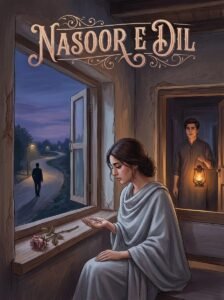
Rasam simply means custom or ceremony, and Nabila Aziz builds this short, sharp novel around one of the more unsettling customs a family can demand: a marriage meant to last exactly one night. It is a brief read compared to her longer work, but it packs real social criticism into its length, asking what happens when a person is expected to follow a tradition without ever being allowed to question it.
Main Characters
- Sheher Bano: comes from a respectable, noble family and has been raised to obey without protest. Shy and soft spoken, she has never once stood up for her own wishes, which makes her exactly the kind of person a family can quietly use to carry out an unjust custom.
- Haroon: cut from very different cloth. He has little patience for injustice and is known for pushing back against it wherever he sees it, which makes the pressure his own family puts on him, to marry Sheher Bano for a single night and then simply walk away, sit very uneasily with who he actually is.
Story Summary
Rasam opens with a demand dressed up as tradition. Haroon’s family pressures him into a one night marriage with Sheher Bano, a ceremony with a single, cold condition attached from the start: once the night ends, she will have no further relation to him or his family at all. Sheher Bano, raised to follow her elders without question, goes along with it the way she has gone along with everything else in her life, never once given the chance to object.
Haroon is a different story entirely. He is the kind of man who cannot stand by when he sees someone treated unfairly, and the custom he has been asked to carry out sits directly against everything he believes in. Nabila Aziz uses that tension, between a tradition everyone has simply accepted and a man unwilling to accept it quietly, as the engine of the entire novel. What was meant to be a single night, concluded and forgotten, becomes something far more complicated once Haroon decides he is not willing to simply walk away as the custom demands.
As the story moves past its central ceremony, the marriage that was supposed to end quietly instead takes an unexpected turn. Nabila Aziz spends the rest of the novel on what happens when someone refuses to let a thoughtless tradition dictate the rest of two people’s lives, following Sheher Bano as she begins, for perhaps the first time, to have a say in what happens to her.
Central Themes
- Blind obedience to tradition: The novel’s central conflict grows directly out of a custom nobody in the story ever stops to question, until Haroon does.
- A quiet woman finding her voice: Sheher Bano’s arc, from obedience to having real agency over her own life, gives the novel its emotional payoff.
- Standing against injustice, even within your own family: Haroon’s refusal to simply go along with what his family demands makes him the novel’s moral center.
- The weight of a single ceremony: A tradition meant to last one night ends up reshaping two lives, showing how much damage a thoughtless custom can do.
- Choice versus inherited expectation: The novel repeatedly asks what happens when someone is finally given the chance to choose for themselves after a lifetime of being told what to do.
Final Thoughts
Rasam makes its point efficiently, using a short page count to deliver real social criticism about blind adherence to tradition. Nabila Aziz gives Sheher Bano a quiet but genuine transformation, and Haroon’s refusal to accept an unjust custom gives the story its backbone. If you want a quick, thoughtful Urdu read that questions a real social practice without needing hundreds of pages to make its case, Rasam is well worth the short time it asks of you.
More Urdu Novels to Read
Marriages arranged by custom rather than choice fill the Forced Marriage Based Novels collection here. Where to go next: