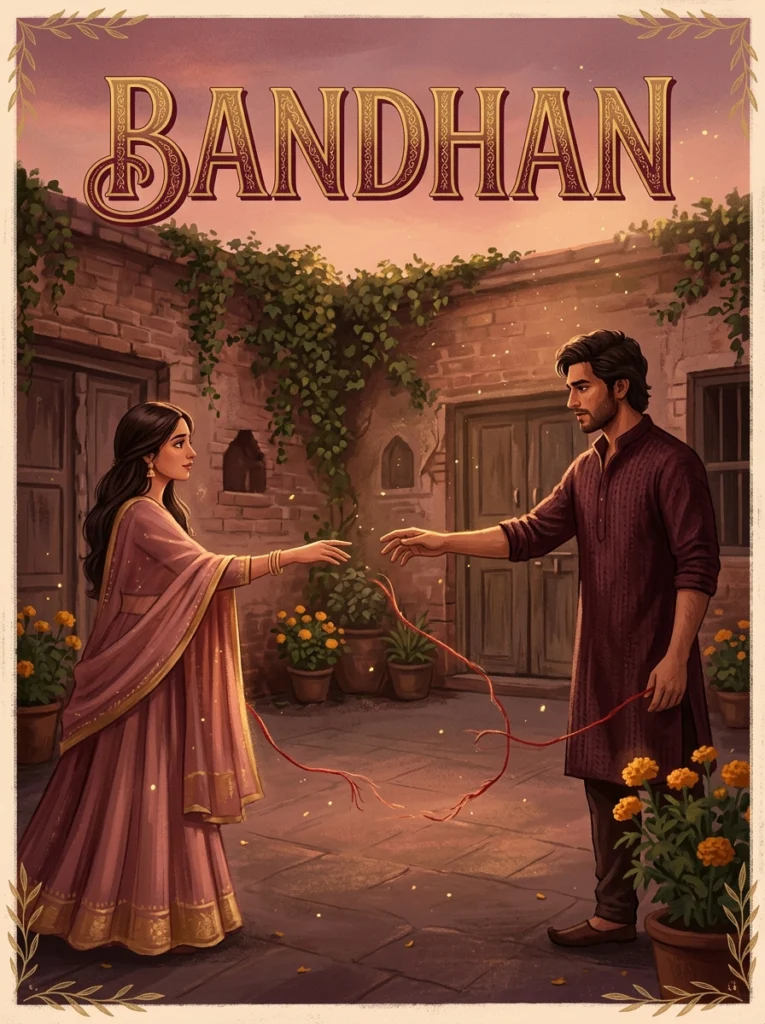
Bandhan means bond, and across more than twelve hundred pages, Mahi Shah and Hiba Khan test exactly how far one can stretch before it breaks. Co-written and built around childhood nikah, cousin marriage, revenge, and the complications of a second marriage, the novel follows a relationship that has to survive pain, distance, and real family pressure before it can settle into anything steady.
Main Characters
Areej is kind hearted and quietly strong, someone who believes in love and relationships even when life makes that belief genuinely difficult to hold onto. Her patience through hardship gives the novel its emotional center.
Haider carries himself as tough and serious, shaped by problems in his past that have hardened his exterior. Underneath that toughness sits a softer heart that only slowly reveals itself as the story moves forward.
Supporting characters, including family elders who offer guidance and others who stir up confusion and tension, round out the wider cast, reflecting the family ties and social pressures running throughout the novel.
Story Summary
Bandhan follows Areej and Haider from very different emotional starting points. Areej remains hopeful and brave even as hardship enters her life, holding onto her belief in love and connection no matter what gets thrown in her path. Haider, by contrast, has been toughened by real difficulty, and that toughness shows up as guardedness, a soft heart hidden carefully behind a hardened exterior.
Mahi Shah and Hiba Khan build their connection around themes familiar to readers of this genre, childhood nikah complicating adult choices, cousin based family expectation, and a second marriage subplot that adds real tension to an already complicated situation. Social obstacles and family differences keep testing Areej and Haider’s bond throughout, with relatives’ opinions and inherited family pressure pushing against whatever trust the two of them manage to build on their own.
As the story develops, themes of revenge surface alongside the central romance, adding real stakes to a plot that could otherwise have stayed purely domestic. Through it all, the novel insists that love can heal real wounds, but only where genuine trust exists alongside it, and Areej and Haider’s relationship is tested again and again to prove whether that trust can actually hold. By its conclusion, the bond the title promises has been earned through real sacrifice rather than simply declared.
Central Themes
- Love that requires real trust to survive: The novel is explicit about this connection, insisting that even the strongest feeling can break without genuine trust underneath it.
- Family bonds tested by circumstance: Childhood nikah and cousin based expectation give the central relationship real complications rooted in family structure rather than simple misunderstanding.
- Sacrifice as the price of lasting connection: Both Areej and Haider give up real comfort and certainty for each other, reinforcing the novel’s larger point about what genuine bonds actually cost.
- Revenge woven into domestic drama: The novel’s revenge based subplot adds real tension beyond the central couple’s story, broadening its scope past a purely romantic narrative.
- Toughness hiding real vulnerability: Haider’s hardened exterior masking a softer heart reflects a familiar but effective idea about how people protect themselves after real hardship.
Final Thoughts
Bandhan earns its considerable length by giving Areej and Haider’s relationship real obstacles to work through, tying their personal story to family expectation, old wounds, and a revenge subplot that keeps the stakes high throughout. Mahi Shah and Hiba Khan’s accessible, heartfelt writing style has connected with readers looking for a story grounded in family values and emotional honesty. If you enjoy long, socio-romantic Urdu fiction built on childhood nikah, cousin marriage, and the hard work of rebuilding trust, Bandhan is a substantial, rewarding read.